For numerous in the UK, the basement is a neglected space, a place for boxes and old furniture. But it possesses real possibility for something more. Setting up a Chicken Run Slot, a custom-built poultry enclosure, down there offers a clever answer for keeping chickens in towns and suburbs. This idea tackles the usual headaches: tiny gardens, foxes on the prowl, and maintaining the peace with next-door neighbours. It also brings clear perks, like steady temperatures, better disease control, and a private sanctuary for both the birds and their keeper.
Cost Analysis and Future Benefit
The upfront cost for a basement Chicken Run Slot is higher than for a typical garden coop. You’re paying for structural work, professional trades for electrics and ventilation, and premium materials. But this investment pays back over time through greater durability, zero losses to foxes, and reduced feed bills because the birds aren’t using energy to stay warm or cool.
What does it do for your property’s value? It’s not a ordinary kitchen extension. Yet a expertly crafted professional installation could be a special selling point for the ideal buyer, someone focused on self-sufficiency. More directly, it ensures a weather-proof supply of home-grown eggs, reflecting a real shift in the UK towards sustainable living.
Analyzing the costs, ventilation and waterproofing are commonly the biggest tickets. You can shave material costs by acquiring second-hand commercial panels or farm fittings. Remember the running costs too. LED lights are affordable to run, but an extraction fan humming all day adds to the electricity bill. Often, the savings elsewhere offset this.
The long-term value is also about durability. If something like Bird Flu hits and the government orders all poultry indoors, your basement is already the optimal bio-secure housing. That preparedness safeguards your flock and your investment. It means you can carry on with care and production, no matter what’s happening outside your walls.
Creating Your Basement Chicken Run Slot
Achieving this demands careful design, determined by the specific basement you have. The “Slot” idea is about a long, narrow enclosure that makes the most of a wall. You need a few indispensable elements: sturdy, chew-proof materials for the frame and mesh, a ventilation system that functions properly to manage dampness and ammonia, and a built-in way to manage waste that’s simple to clean.
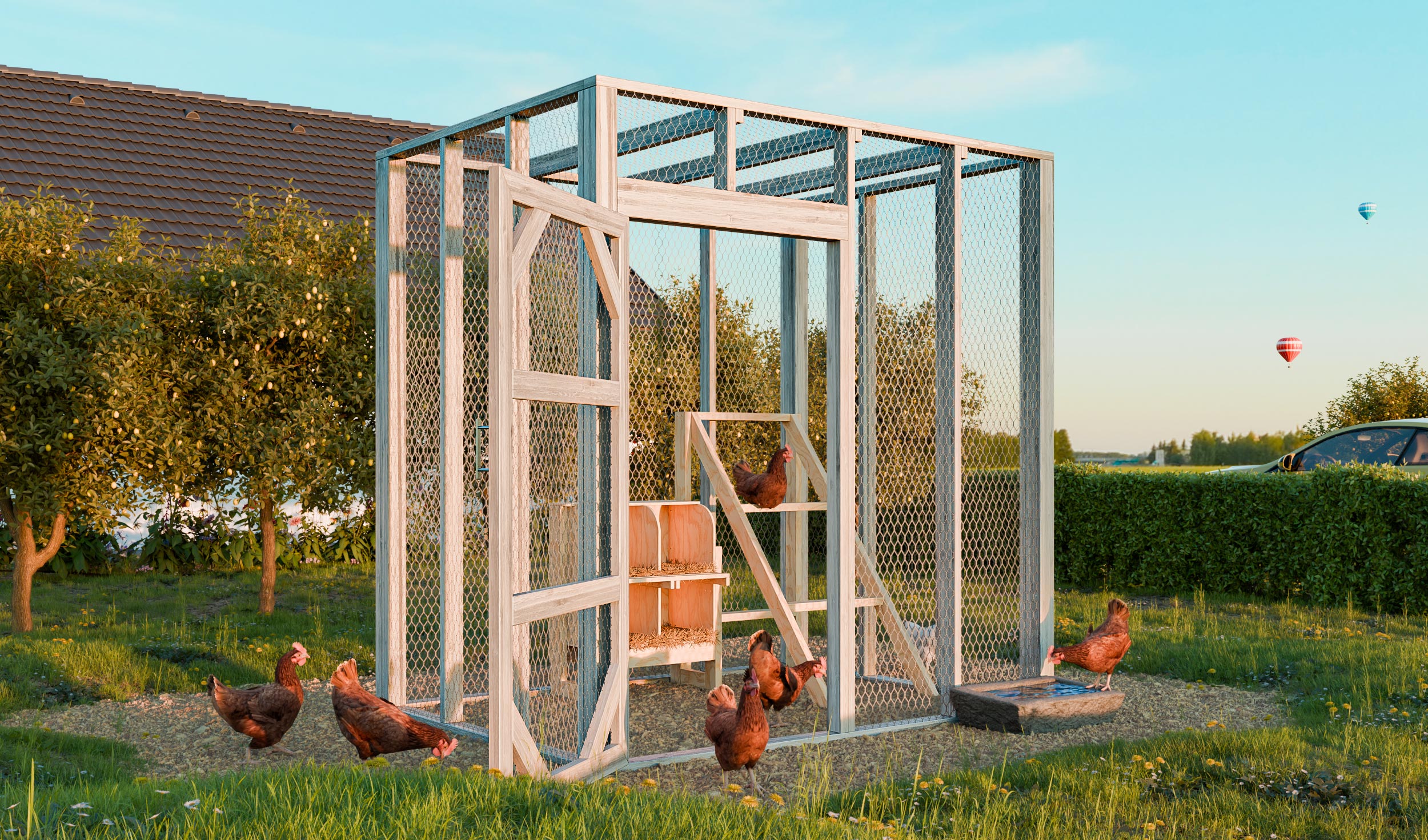
Lighting should not be an afterthought. Full-spectrum LED setups are required to simulate natural day and night, which maintains the hens thriving and laying. You must include plenty of perches, private nesting boxes, and activities for the birds to do. The design also has to let you in conveniently to feed them, clean up, and monitor their health, all within the boundaries of a basement corner.
Think about your own movements when designing the layout. Placing feed bins, a cupboard for cleaning gear, and even a small sink near the run makes daily jobs quicker. Flooring choice is crucial. A poured resin floor or heavy-duty sealed vinyl is ideal. It protects the surface so you can wash it down, and a gentle slope towards a drain directs the dirty water away.
Smart design accommodates change later. Adjustable partitions inside the run enable you create a separate zone for new or poorly birds. Incorporating viewing panels made from tough Perspex provides you with a window on their world without disturbing them. It also brings light into the basement and can serve as a talking point for the whole household.
Addressing UK-Specific Legal and Planning Concerns
Before you commence knocking walls about, consult your local planning authority https://chicken-run.eu.com/. Internal remodelling typically falls under Permitted Development, but big structural changes or new external vents might need permission. Building Regulations are essential, especially Parts B for fire safety, C for damp, and F for ventilation. You must follow these regulations.
Animal welfare law, primarily the Animal Welfare Act 2006, applies entirely. Your setup must meet all the requirements of the birds. You should also contact your home insurer. Notify them about the change of use, as it could affect your cover and liability. Anticipating this avoids expensive fixes later.
Don’t forget local council bylaws on noise, nuisance, and running a business. If you sell a few surplus eggs to friends, someone might consider that a business activity, which adds more rules. A discussion with a building control officer early on resolves grey areas. They can inform you if your waste system needs inspection, or if you need a special fireproof wall.
It’s also wise to mention significant alterations to your mortgage provider. A basement chicken run most likely won’t change your loan, but honesty sidesteps trouble. Retain every receipt and certificate, especially for electrical and ventilation work. This paperwork is gold if you ever sell the house or make an insurance claim.
The Allure of a Underground Poultry Space
Basements in British homes often do little more than store junk or host a washing machine. Yet their natural features are ideal for a specialised job perfectly. Those always cool, stable temperatures maintain chickens comfortable, a blessing during a muggy British heatwave. The solid walls and floor present a serious obstacle for common predators. Foxes, rats, and even sparrowhawks are locked out, offering a level of security a flimsy garden run just cannot provide.
Using part of the basement also liberates the garden. In homes with a small patio or strict rules on how the garden should look, moving the chickens indoors maintains tidy outside. This separation significantly reduces noise and smells reaching neighbouring properties. That’s a major point for maintaining good relations with the people next door, and for remaining within the bounds of nuisance laws.
There’s a mental benefit to having a specific, contained space. It makes the daily routine of care more streamlined and efficient, away from the wind and rain. For families, it turns chicken-keeping from a muddy, weather-dependent job into an accessible indoor activity. Kids can get involved, and chores get done whether it’s midday or midnight, summer or winter.
Core Infrastructure and Air Quality Control
The physical build is what ensures safety. Walls and floors need sealing with waterproof, non-porous coatings like tanking slurry or epoxy paint. This enables you to disinfect properly. Any electrical work for lights and fans must be done by a professional to UK building standards. Use IP-rated conduits and sealed fittings to shield from dust and moisture.
This highlights the single most important technical job: ventilation. A few air bricks won’t be enough for a living space like this. You need an active, ducted system with inline fans. It has to pull fresh air in and expel stale, ammonia-heavy air immediately out. Aim for at least one complete air change each hour, but make sure you can control the rate.
For more precise control, consider adding humidity and carbon dioxide monitors. These can link to the ventilation to modify the fan speed automatically, maintaining the air healthy for their lungs. The intake duct should pull from a clean source, not a dusty corner. Exhaust ducts must vent well away from your own or your neighbour’s windows to prevent any complaints.
In highly sealed basements, extra air filtration like HEPA scrubbers can filter floating dander and dust. This aids the birds and your home’s air. None of this works without upkeep. Cleaning ducts and swapping filters is a regular job. Neglect it, and the system fails. Let dust build up, and you’re facing a potential fire risk.
Climate Control and Ecological Benefits
A basement’s thermal mass acts as a natural buffer. In winter, the surrounding earth keeps heat in, so you use less heating. In summer, it remains cooler than an outdoor run, protecting the flock from heatstroke. This steady microclimate often results in more reliable egg production through the year, unlike a coop at the mercy of the elements.
This controlled setting boosts biosecurity. The chance of disease hopping over from wild birds or rodents decreases significantly. You can implement stricter hygiene because you constructed the entire environment. For the keeper, there’s the plain comfort of performing duties in any weather. No more struggling with horizontal rain or knee-deep mud. That practical benefit makes it easier to stick to a consistent routine.
You gain exact control over light. With simple timers, you can prolong “daylight” hours in the dark winter months to maintain egg production. That’s a level of control that’s expensive and tricky outdoors. The stability lowers stress for the flock. They won’t face sudden gales, sharp frosts, or the panic caused by a hawk’s shadow swooping overhead.
From a green angle, a basement setup can connect to your home. Waste heat from a boiler or utility room can be gently directed to warm the space. On the flip side, the bedding and manure you collect is ideal for the garden. Kept dry in the basement, it becomes a rich compost, forming a neat nutrient loop right on your property.
Seamless Integration with Home Life
Placing a Chicken Run Slot into the basement requires thinking about the flow of household life. Sound insulation in the basement ceiling controls the clucking. A specific route in and out, perhaps through a utility room, aids contain spills of feed or bedding. Housing feed in airtight bins in the basement is practical, but you have to be meticulous about preventing pests out.
The space still needs to provide access to household essentials: the boiler, the fuse box, the stopcock. A definite physical barrier—a solid wall or partition—between the poultry zone and the laundry or storage area is critical for hygiene and sanity. The objective is for the chickens to integrate into your home, not cause chaos.
Consider how people will traverse the space. A solid, well-sealed door on the poultry area is necessary to lock in dust and smells. A compact ante-room for putting on wellies and a coat keeps you bringing anything into the main house. Putting in a deep sink, or even a hose point, in the basement transforms a big cleaning job into a doable one.
Consider the people, too. For families with children, the basement can be a great classroom, permitting safe watching and learning. Establish clear rules on access and hand-washing. On the other hand, if someone in the house has allergies or just doesn’t like birds, keeping them completely segregated downstairs is a clear win over a coop in the shared garden.
Welfare and Moral Management Underground
Housing chickens in a basement demands more from you, ethically. Lacking direct sun and dirt, you must provide UV light through special bulbs and give them material for dust baths. The space per bird ought to be more generous than the minimum guidelines, to make up for them not ranging freely. Environmental enrichment isn’t optional here; it’s central.
You must watch their health like a hawk. Early illness signs are more subtle in a stable environment. The keeper must become an expert in normal flock behaviour. While the basement provides superb protection, it’s a managed world. Your role changes from overseer to primary provider of everything—stimulation, variety, comfort. It calls for a deeper, daily commitment.
Enrichment must change to stop boredom setting in. Bored chickens start feather pecking. Rotate objects for them to investigate, hang up cabbages, use different perch layouts, and try safe audio like a radio on low. A deep litter system handles waste, but it also allows them perform natural foraging behaviour, scratching and turning the bedding over.
The ethical choice originates with the birds you buy. Pick calmer, adaptable hybrid breeds that handle confinement well, not flighty heritage breeds that need acres to roam. In the end, the keeper’s daily attention—the watching, the interacting, the tweaking of their environment—becomes the most vital part of welfare in this human-made world below ground.
The basement hideaway Chicken Run Slot is a sophisticated take on keeping poultry in modern Britain. It converts dead space into a secure, controlled, and efficient environment that solves urban problems directly. It demands detailed planning, a financial investment, and an unwavering focus on welfare. In return, it delivers a unique, private, and sustainable way to produce food at home, reshaping how small-scale husbandry fits into contemporary life.